QOS MSP is the outsourced IT department for Indianapolis-area businesses - managed IT, cybersecurity, cloud, and IT leadership from one accountable team. Part of QOS, delivering IT since 2007.
Contact Info
PO Box 14, Sheridan, IN 46069
+1 (877) 800-7672
info@qosmsp.com
Monday-Friday, 8:00 AM - 5:00 PM
Indiana managed cloud services
Managed Cloud Services in Indianapolis
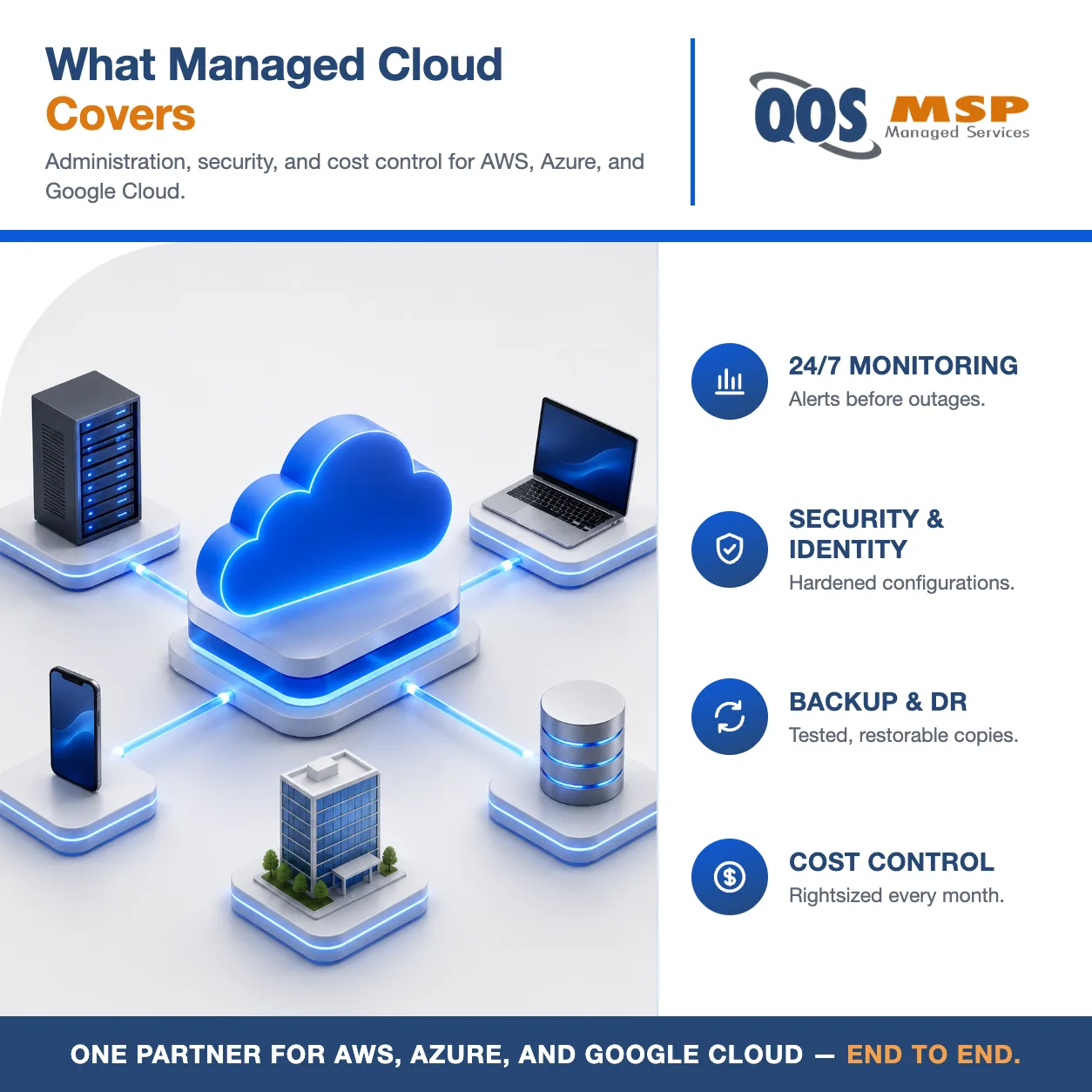
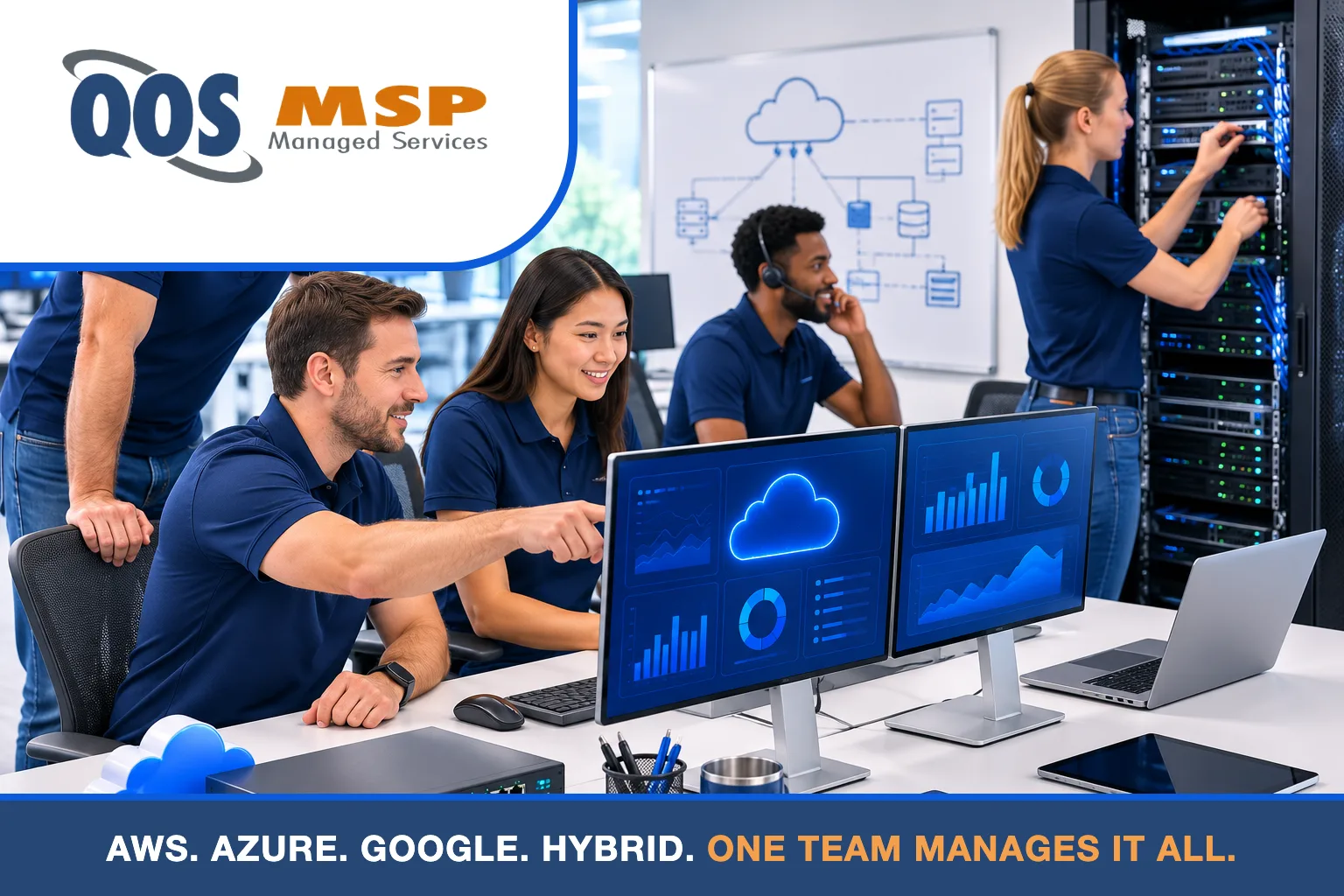
Managed cloud services for AWS, Microsoft Azure, and Google Cloud — 24/7 monitoring, security, and cost control for businesses across Indiana, so your team can focus on the business instead of the infrastructure.
Six core services for Indiana businesses that run on AWS, Azure, or Google Cloud.
Cloud Migration
Plan and execute moves to the cloud — or between platforms — without disrupting daily operations.
Cloud Security
Harden configurations, manage identity and access, and close the misconfigurations that cause most cloud breaches.
Monitoring & Management
24/7 monitoring, patching, and performance tuning keep your cloud environment fast and reliable.
Backup & Disaster Recovery
Tested backups and recovery plans that restore your data and workloads when something goes wrong.
Cloud Cost Optimization
Rightsize resources, eliminate unused services, and turn surprise invoices into a predictable monthly spend.
Hybrid Cloud Management
Securely connect on-premises servers and cloud workloads and manage them as one environment.
What Managed Cloud Changes for Your Business
Getting workloads into the cloud is the easy part. Keeping them secure, fast, and affordable over the long run is where most businesses struggle.
Without cloud management
Surprise invoices and billing sprawl
Misconfigurations expose your data
Outages your customers find first
Staff burning hours on server chores
With QOS cloud management
Predictable, optimized monthly spend
Hardened, continuously reviewed security
24/7 monitoring catches issues early
Your team focused on the business
A managed cloud turns your infrastructure from a monthly gamble into a predictable business asset.
The Gap Between Cloud Setup and Cloud Scale
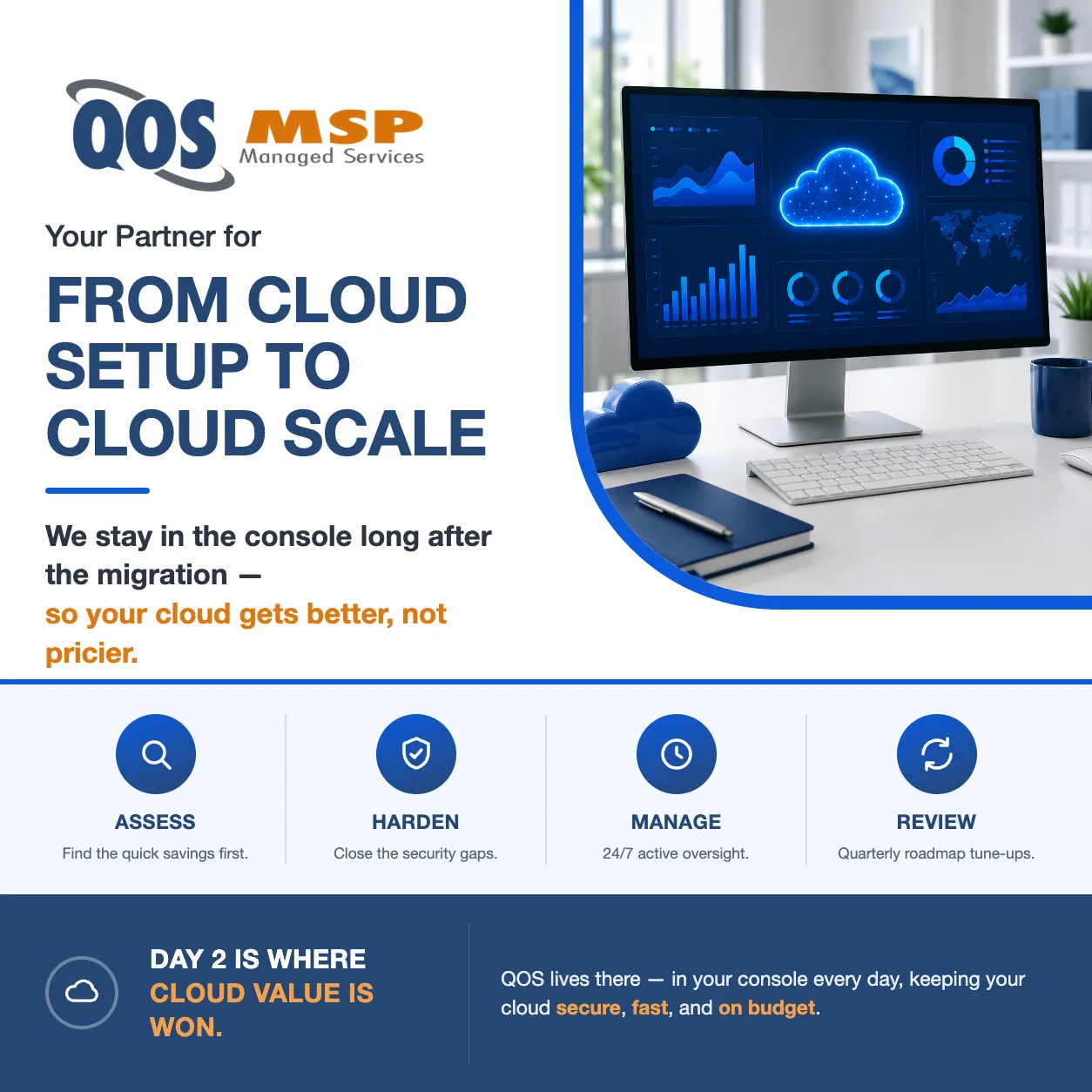
Deploying to the cloud is straightforward — long-term stability and cost-efficiency are where most businesses falter. The console makes it easy to launch resources, and just as easy to lose track of them.
As a managed service provider, QOS bridges the gap between initial deployment and a fully optimized, enterprise-grade environment. We stay in the trenches long after the migration is over — assessing, hardening, and actively managing your environment, with quarterly reviews that adjust the roadmap as your business evolves.
That “day 2” work is the difference between a cloud bill that creeps up every month and an environment that gets more efficient as it grows.
What Are Managed Cloud Services?
Managed cloud services are the ongoing administration, monitoring, security, and cost optimization of a company's cloud infrastructure — platforms like AWS, Microsoft Azure, and Google Cloud — handled by an outside IT partner for a monthly fee. Instead of hiring in-house cloud engineers, you get a full operations team that already knows the platforms.
Managed cloud services typically include:
24/7 monitoring and alerting
Security hardening and identity management
Patching and platform updates
Backup and disaster recovery
Cost optimization and rightsizing
Scaling and performance tuning
Compliance and governance controls
Cloud vendor and platform support
If it keeps your cloud environment secure, fast, and affordable, it’s part of the service.
The QOS difference
Why Indianapolis Businesses Choose QOS for Cloud Management
Plenty of providers can resell you a cloud subscription. Far fewer will live in your console every day and treat your cloud bill like their own.
What sets our cloud management apart:
Founder-led team, senior engineers on every account
Flat monthly management fee, published pricing
Platform-neutral across AWS, Azure, and Google Cloud
Zero vendor lock-in — you own every configuration we document
We’ve been managing business infrastructure since 2007 — the cloud just changed where it runs.
Benefits of Professional Cloud Management
The value shows up in your uptime, your security posture, and your monthly invoice.
What you can expect:
Lower monthly cloud spend
Fewer security incidents and misconfigurations
Higher uptime and faster recovery
Audit-ready compliance posture
Predictable, budgetable IT costs
Staff time back for real projects
See how cloud management fits a flat monthly budget on our pricing page.
Cloud Platforms and Environments We Support
Whether you're all-in on one platform or split across several, we manage it as one environment.
Choosing a cloud provider — or a partner to manage one — is a decision most businesses only make once. This guide walks through what to look for, the questions to ask, and the pricing traps to avoid, so you can compare providers with confidence.
Managed cloud services put the daily operation of your cloud infrastructure — monitoring, security, patching, backups, and cost control — in the hands of an outside IT team for a monthly fee. You keep full ownership of your accounts and data; we do the operational work.
It depends on the size and complexity of your environment — the number of workloads, platforms, and users drives the price. We quote a flat monthly management fee up front, and active cost optimization typically offsets a meaningful share of it.
Yes. We manage AWS, Microsoft Azure, and Google Cloud, and we're platform-neutral — we'll recommend the platform that fits your workloads and budget, not the one that pays the best margin.
Yes. Most of our clients aren't 100% in the cloud. We manage the on-premises side, the cloud side, and the connective tissue between them — VPNs, identity, and secure networking — as a single environment.
We set up guardrails: automated policies that restrict unauthorized resource launches, alerts when spending crosses your approved threshold, and regular rightsizing reviews that shut down what you're paying for but not using.
You leave with everything. We document every architectural change we make, and you own all configurations and documentation — your cloud environment is your asset, and there's no vendor lock-in holding you here.