
About QOS MSP
QOS MSP is the outsourced IT department for Indianapolis-area businesses - managed IT, cybersecurity, cloud, and IT leadership from one accountable team. Part of QOS, delivering IT since 2007.
Contact Info
- PO Box 14, Sheridan, IN 46069
- +1 (877) 800-7672
- info@qosmsp.com
- Monday-Friday, 8:00 AM - 5:00 PM
Structured Cabling Services in Indianapolis
Cabling Services We Install and Certify
Six cabling services for Indiana businesses building, moving, or upgrading their network plant.
Cat6 & Cat6A Copper Cabling
10G-ready copper runs installed and Fluke-certified for fast, reliable business connectivity.
Fiber Optic Cabling
OM3/OM4 multimode and OS2 singlemode fiber for high-bandwidth backbones and long runs.
Cable Certification & Testing
Every run tested with a Fluke analyzer to TIA-568 and documented for warranty.
Patch Panels, Racks & Terminations
Cleanly terminated patch panels and organized MDF/IDF racks that keep closets serviceable.
Cable Management & Labeling
Combed, dressed, and labeled pathways so every drop is traceable and airflow stays clear.
Cabling for Moves, Adds & Buildouts
New drops, office moves, and retrofits added to your plant without ripping out what works.
What Certified Cabling Changes for Your Network
Most cabling problems trace back to how the plant was installed and whether anyone documented it. Certification and labeling are what decide which network you end up with.
Without certified cabling
- Rat's-nest closet, tangled unlabeled runs
- Runs never tested or certified
- No labels, panels, or as-built docs
- Mystery drops nobody can trace
With QOS cabling
- Combed, dressed runs in a clean closet
- Every run Fluke-tested to TIA-568
- Labeled panels and as-built documentation
- Every drop mapped and 25-year warrantied
The Physical Layer Every Business Network Runs On
Every business network runs on a physical layer: the copper and fiber cabling in the walls, the patch panels in the closet, and the labeled drops at each desk. It’s the one part of the network you can’t fix with a software update — get it wrong and every device downstream pays for it in dropped connections and slow throughput.
Structured cabling is that layer, installed to a standard. We pull Cat6, Cat6A, and fiber, terminate them on labeled patch panels, dress and manage the runs, then test and certify every one with a Fluke analyzer — so the plant is documented, warrantied, and built to outlast the equipment plugged into it.
This page covers the physical cabling plant only — the wiring, panels, terminations, and testing. The switches and routers that light it up are a separate service: see our network design and deployment, or the full infrastructure services hub for how the pieces fit together.
We install cabling for businesses across Indianapolis, Indiana, and Chicagoland.

What Is Structured Cabling?
Structured cabling is the standardized system of copper and fiber cabling, patch panels, pathways, and labeled drops that carries all of a building's data, voice, and connected-device traffic to TIA-568 standards.
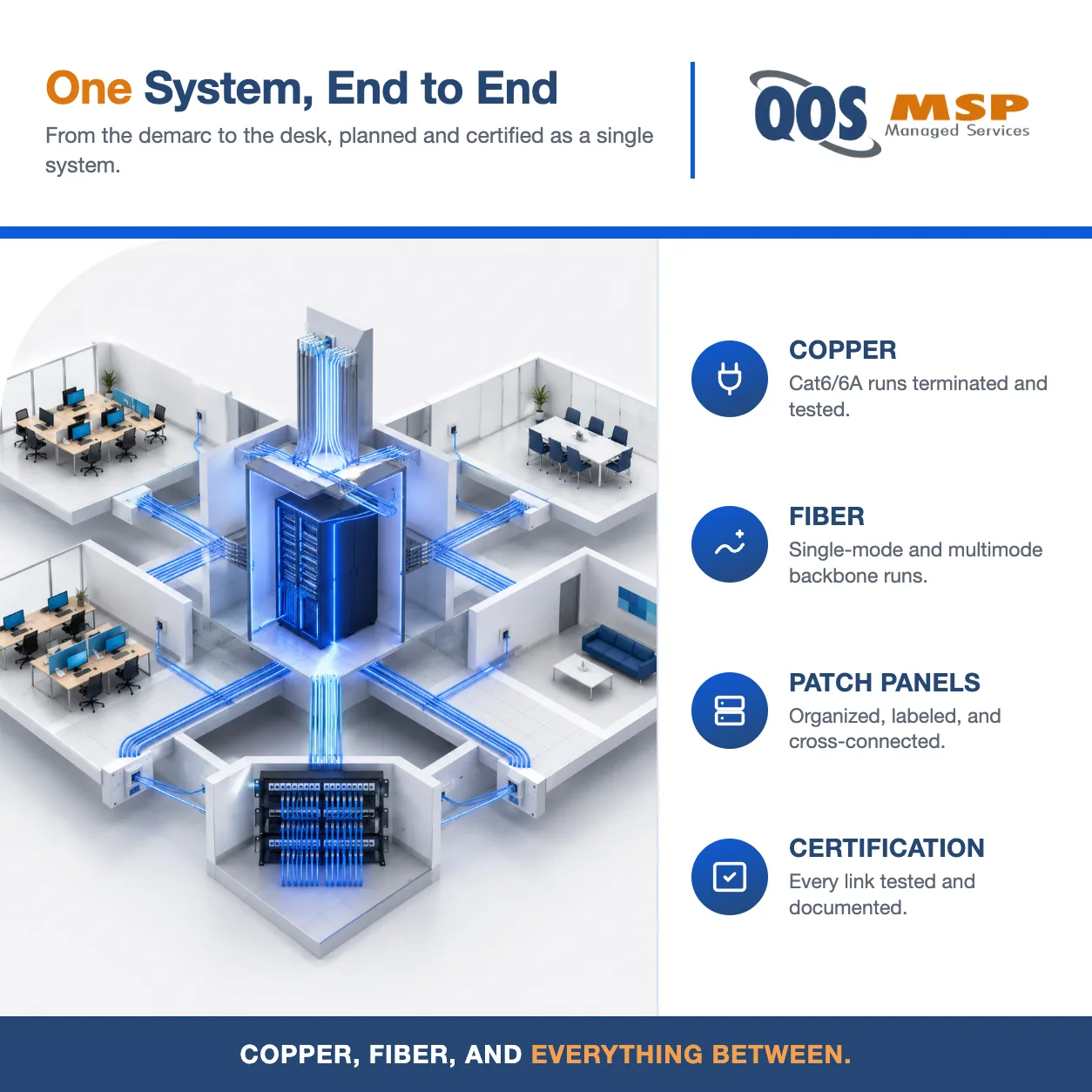
- Cat6 and Cat6A copper cabling
- OM3/OM4 multimode and OS2 singlemode fiber
- Patch panels and termination blocks
- Equipment racks and cabling closets (MDF/IDF)
- Horizontal cable runs and labeled drops
- Pathways, conduit, and cable management
- Labeling and as-built documentation
- Fluke test results and certification records
Structured Cabling for Indianapolis Offices
Plenty of installers can pull cable. The difference shows up after they leave: most hand over nothing on paper — no test results, no labels, no map. We've installed and certified structured cabling for nearly two decades, and we do the opposite.
- Fluke-certified test results for every run
- Labeled patch panels and mapped drops
- As-built documentation you keep
- 25-year manufacturer warranty registration

Benefits of Professionally Installed Cabling
Certified cabling pays back every day the network runs — in speed, stability, and how fast a problem gets found and fixed.

- Full-speed, 10G-ready copper and fiber runs
- Fewer connectivity drops and network faults
- Faster troubleshooting from labeled drops
- Airflow-friendly, serviceable closets and racks
- Documented plant that speeds future moves and adds
- Warranty-backed installation you can rely on
When Businesses Call Us for Cabling
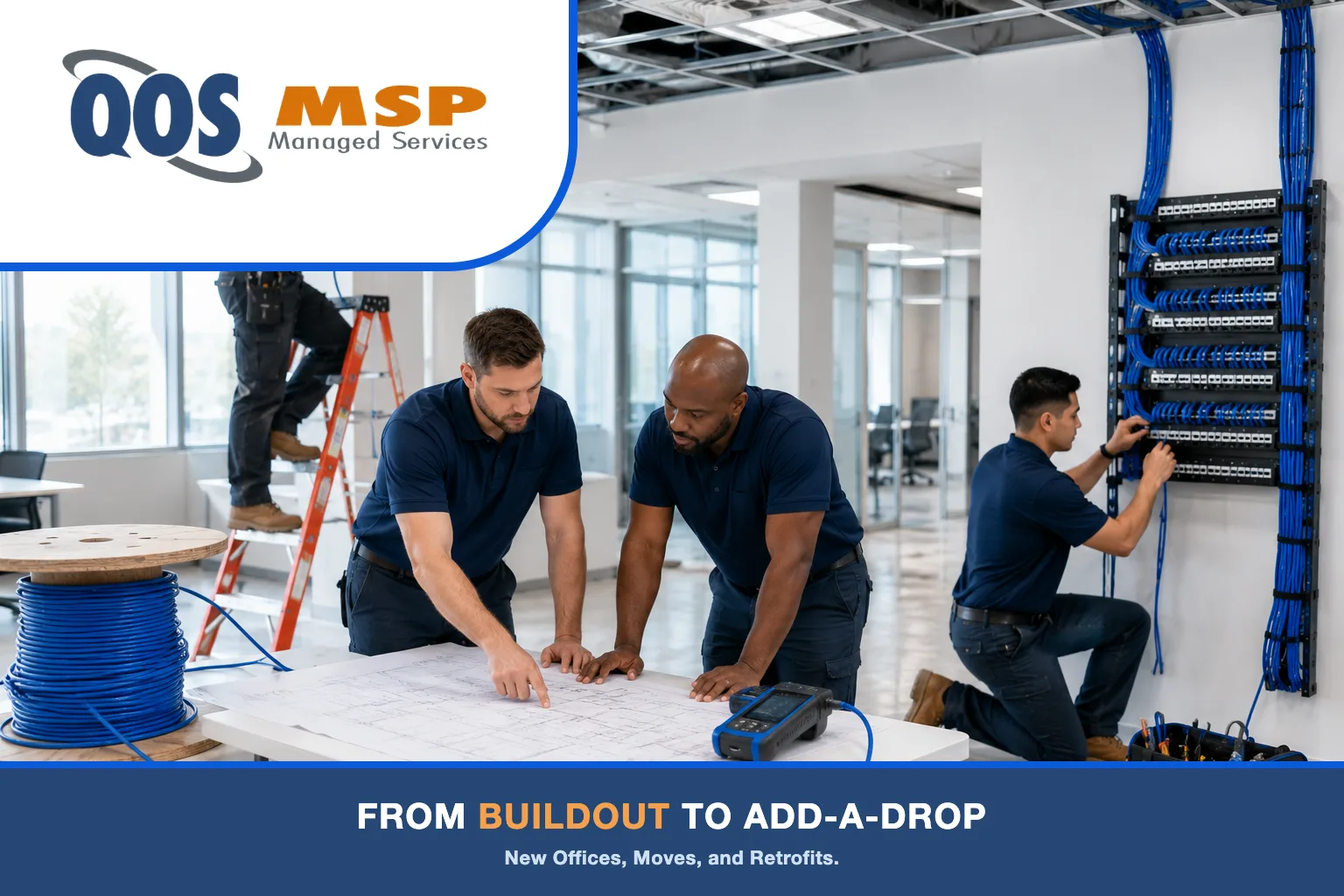
Cabling isn't a one-time event — it's the physical plant you touch every time the business changes. We pull new runs for buildouts, moves, and retrofits, including dedicated drops for the wireless access points our Wi-Fi team installs.
- New office buildouts and construction
- Moves, adds, and changes (MACs)
- Retrofits of aging Cat5/Cat5e plant
- Added drops and MDF/IDF re-termination
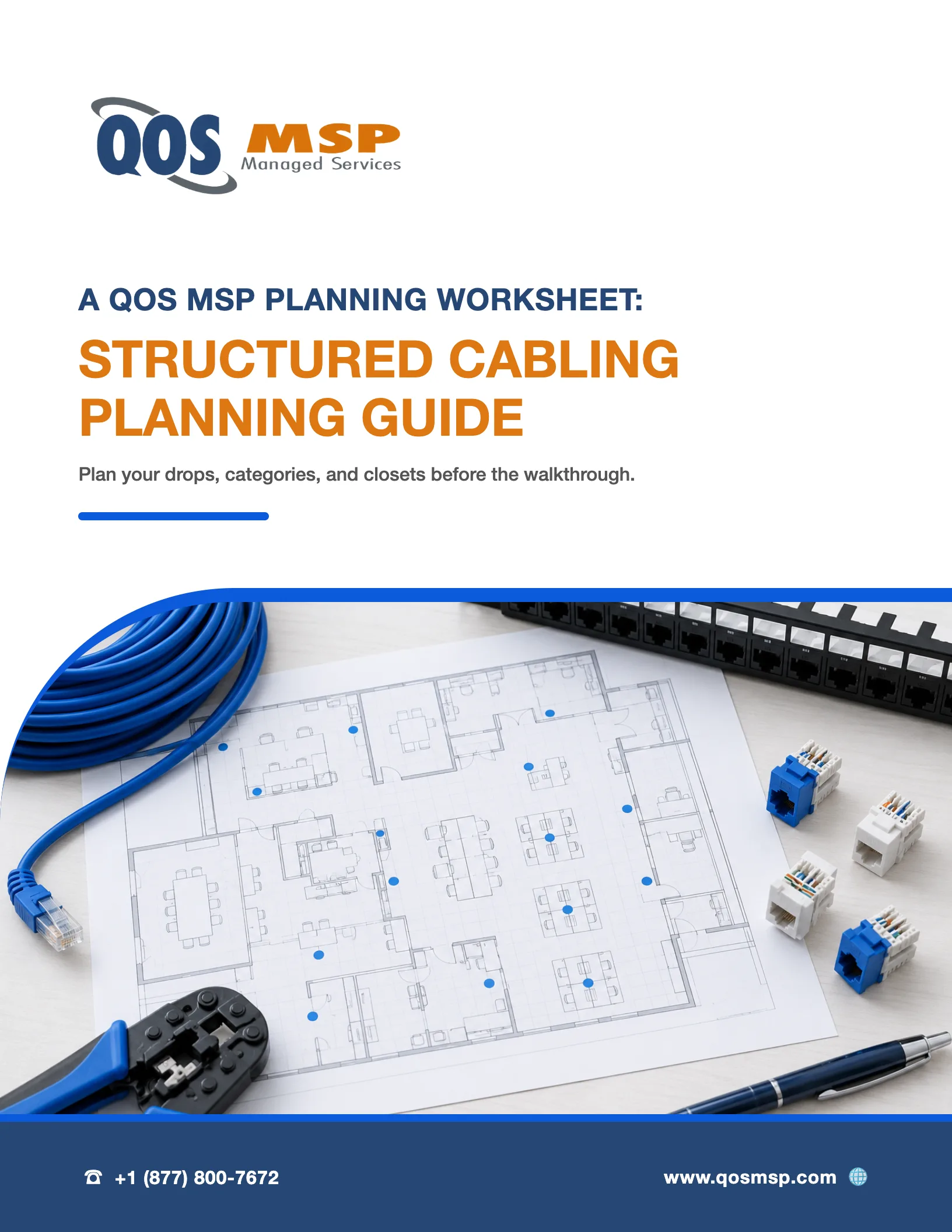
Download the Structured Cabling Planning Guide
Planning a cabling project is guesswork without a drop plan. This worksheet walks you through drops per room, Cat6-vs-Cat6A-vs-fiber, and what to have ready — so your walkthrough and quote are fast and accurate.
Frequently Asked Questions About Structured Cabling Services
-
What is structured cabling?
Structured cabling is a standardized system of copper and fiber cabling, patch panels, pathways, and labeled drops installed to TIA-568 standards. Instead of ad-hoc runs added over the years, it gives a building one organized, testable, and expandable wiring plant that carries all data, voice, and connected-device traffic.
-
What's the difference between Cat6 and Cat6A?
Cat6A carries 10 Gigabit Ethernet over the full 100-meter run; Cat6 reaches 10G only to about 55 meters and 1G at the full distance. Cat6A costs more and is thicker to route, but it's the safer choice for new buildouts and long runs where you want 10G headroom for years.
-
What does cable certification mean, and why does it matter?
Cable certification means every run is tested with a Fluke analyzer against TIA-568 performance limits — not just a continuity check. The analyzer measures signal, crosstalk, and length and produces a pass/fail report for each run. That documented certification is what unlocks the 25-year manufacturer warranty on the cabling.
-
How long does an install take, and will it disrupt my office?
A typical 30-to-50-drop office takes about 2 to 4 days. Timelines scale with drop count, ceiling access, and how much closet or rack work is involved. We work after-hours or in phases, so most clients see zero downtime during the install.
-
Do I need to re-cable the whole office or just add drops?
Often you only need to add drops. If your existing Cat5e or Cat6 tests clean, we build on it rather than tearing it out. A full re-cable is warranted only when runs fail certification, are physically damaged, or can't support your target speeds — and we tell you that after testing, never before.
-
How much does structured cabling cost per drop?
Structured cabling is quoted per drop after a free on-site walkthrough. The price per drop depends on drop count, cable category (Cat6, Cat6A, or fiber), plenum or ceiling access, run distance, and any closet or rack work. Because those vary by building, we don't publish a flat rate — the walkthrough is what makes the quote accurate.