
About QOS MSP
QOS MSP is the outsourced IT department for Indianapolis-area businesses - managed IT, cybersecurity, cloud, and IT leadership from one accountable team. Part of QOS, delivering IT since 2007.
Contact Info
- PO Box 14, Sheridan, IN 46069
- +1 (877) 800-7672
- info@qosmsp.com
- Monday-Friday, 8:00 AM - 5:00 PM
HIPAA Compliance Services
Core HIPAA Compliance Services We Provide
Six services that take a practice from "we have a binder" to provably compliant.
HIPAA Security Risk Analysis
The formal risk analysis HIPAA requires — threats and vulnerabilities identified, documented, and ranked.
HIPAA Readiness Assessment
We measure your practice against every safeguard and deliver a prioritized path to compliance.
Safeguards & Access Controls
Administrative, physical, and technical safeguards implemented — encryption, MFA, and least-privilege access.
Policies & Documentation
HIPAA policies, procedures, and training records auditors and investigators expect to see.
Incident Response & Breach Notification
A tested response plan and the notification process HIPAA's Breach Rule demands.
Ongoing Compliance Monitoring
Audit logging, access reviews, and annual risk-analysis updates that keep compliance current.
The Cost of Treating HIPAA as Paperwork
Most practices have a HIPAA binder; far fewer have the safeguards behind it. OCR investigators — and ransomware crews — can tell the difference.
HIPAA on paper only
- Risk analysis missing or years old
- Policies unread and safeguards unenforced
- Breach response improvised under pressure
- Fines, corrective action plans, lost trust
HIPAA with QOS MSP
- Current, documented risk analysis
- Safeguards implemented and monitored
- Tested incident response plan
- Audit-ready evidence and patient trust
Patient Data Is a Target — and a Legal Obligation
Healthcare is the most-breached industry in America, and small practices are not too small to be targets — ransomware crews prefer organizations that can’t afford downtime.
The legal exposure lands on you either way: HIPAA’s Security, Privacy, and Breach Notification Rules apply to solo practices and business associates just as they do to hospital systems, and OCR enforcement doesn’t check your headcount first.
Here’s the practical reality: most HIPAA requirements are IT controls — access management, encryption, audit logging, backups, incident response. The team that runs your systems is the natural team to keep them compliant.
That’s how we deliver it. QOS MSP builds HIPAA into the managed IT we already run for practices and healthcare vendors — founder-led since 2007, doing this work weekly for covered entities and business associates.
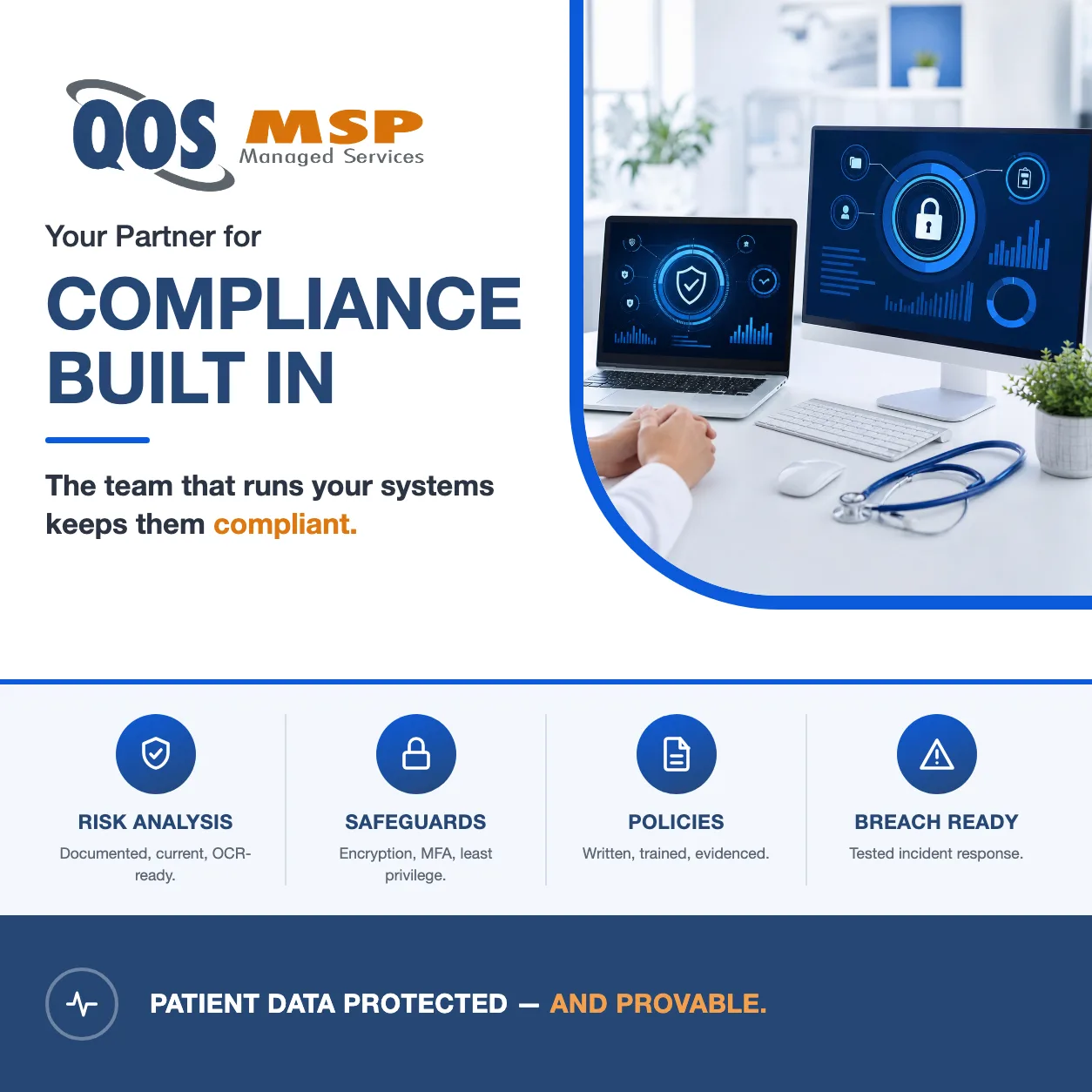
What Are HIPAA Compliance Services?
HIPAA compliance services are the risk analyses, safeguards, policies, and monitoring a covered entity or business associate maintains — usually with a managed IT partner — to meet the HIPAA Security, Privacy, and Breach Notification Rules and prove it in an audit or investigation.
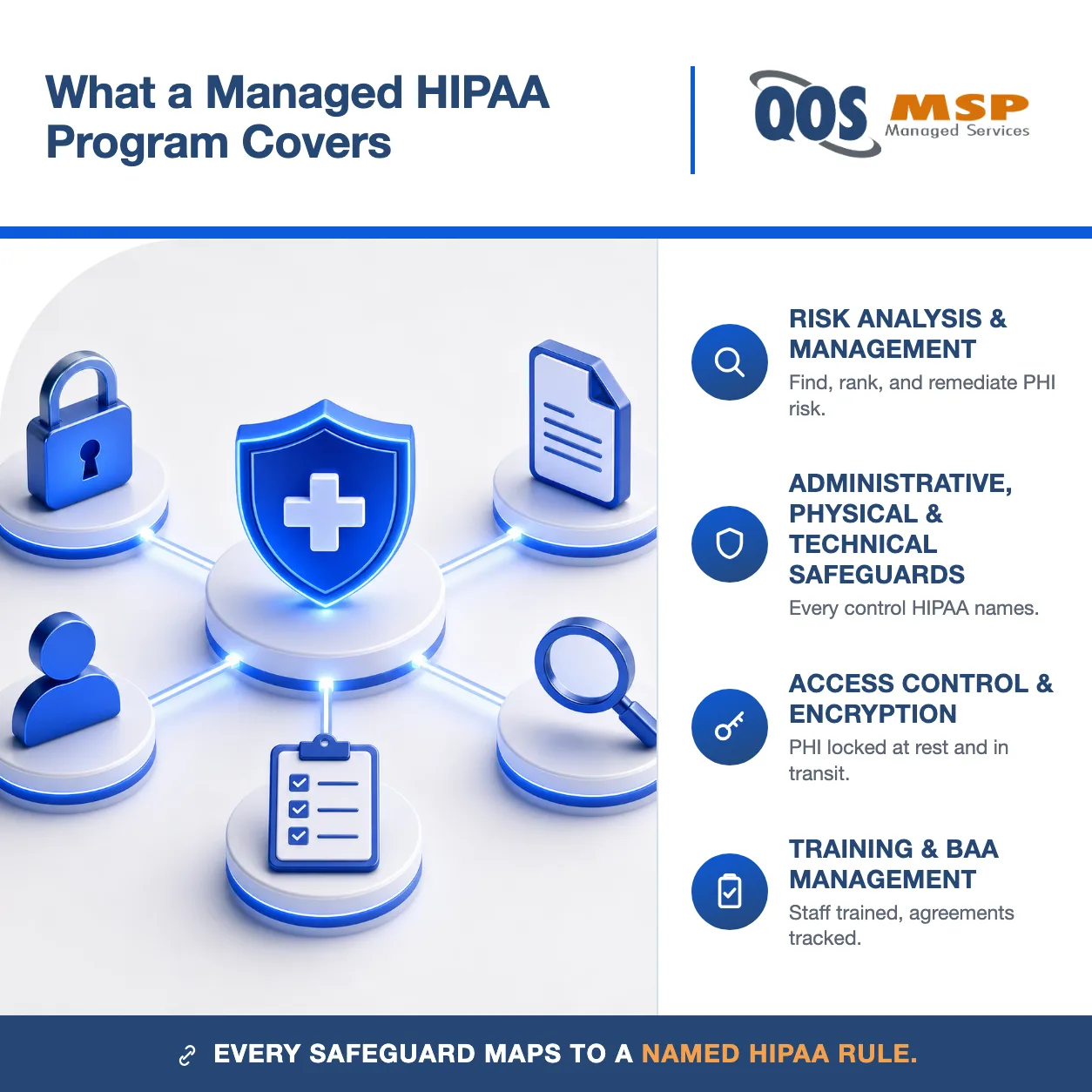
- Security risk analysis and management
- Administrative, physical, and technical safeguards
- Access control and user authentication
- Encryption of PHI at rest and in transit
- Audit logging and activity monitoring
- Staff security awareness training
- Business associate agreement management
- Breach notification and incident response
Why Indianapolis Practices Choose QOS MSP for HIPAA
HIPAA consultants leave you a findings report; we implement the fixes — the same team that already runs your network, workstations, and backups.
- Safeguards implemented, not just recommended
- Flat monthly Compliance-plan pricing
- Healthcare depth: HIPAA, HITRUST, and beyond
- Local support across Indiana and Chicagoland
Benefits of Managed HIPAA Compliance
Compliance run as an ongoing program costs less than one breach investigation — and it shows in how your practice runs.
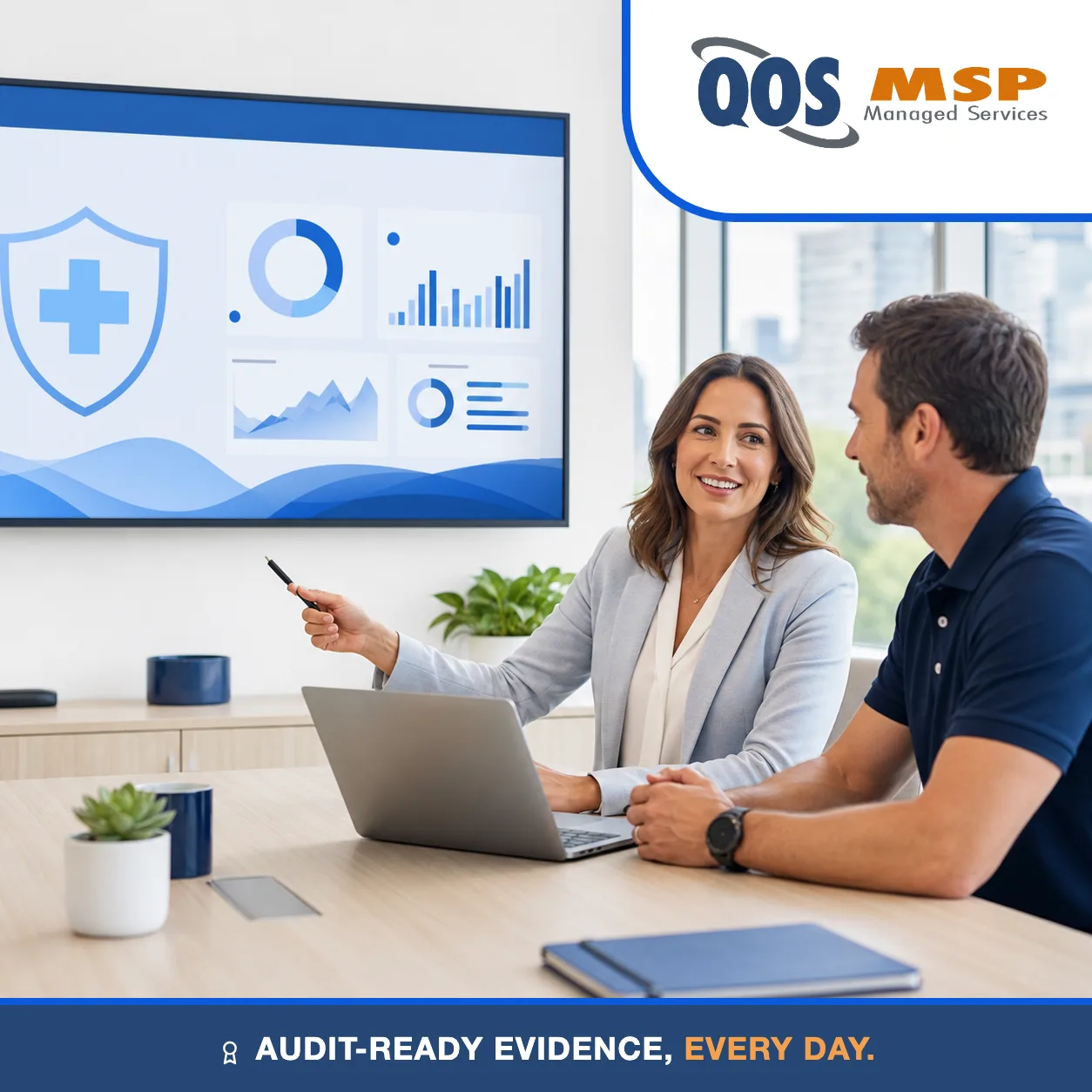
- Face OCR audits with evidence ready
- Avoid HIPAA fines and corrective action plans
- Reduce ransomware and breach risk
- Keep patient trust and referrals
- Satisfy BAA requirements from partners
- Qualify for better cyber-insurance rates
Who Needs HIPAA Compliance Support
If PHI touches your systems — as a provider or a vendor — HIPAA applies, whether you have an IT department or not.
- Medical, dental, and behavioral health practices
- Telehealth and health-tech companies
- Billing companies and business associates
- Clinics, labs, and imaging centers


Download the HIPAA Compliance Strategy Guide
Running a practice — or serving one — and not sure where HIPAA actually stands? This plain-English guide covers the Security Rule's real requirements, the risk analysis OCR expects, what enforcement actually costs, and the compliance roadmap we run with practices. Read it before your next audit, not after.
Frequently Asked Questions About HIPAA Compliance
-
What are HIPAA compliance services?
HIPAA compliance services put the safeguards, policies, and documentation behind the law's Security, Privacy, and Breach Notification Rules — delivered as ongoing management rather than a one-time binder. The work spans risk analysis, technical controls, staff training, and incident response.
-
How much do HIPAA compliance services cost?
Our Compliance plan is $195 per user per month, or $185 on an annual agreement — published in full on our pricing page. It adds the risk analysis, written policies, security-awareness training, and audit support to complete managed IT for your practice.
-
What does a HIPAA security risk analysis include?
We inventory where PHI lives in your systems, identify threats and vulnerabilities, rate their likelihood and impact, and deliver a documented remediation plan. It's the Security Rule's foundational requirement — and the first thing OCR asks for in an investigation.
-
Is HIPAA compliance a one-time project?
No. The risk analysis must be kept current, safeguards need monitoring, training recurs annually, and evidence has to accumulate continuously. That's why we run HIPAA as a managed program rather than an annual scramble.
-
Do business associates need HIPAA compliance?
Yes. Vendors that handle PHI for healthcare clients — billing, IT, software, transcription — are directly liable under HIPAA and must sign business associate agreements. Many of our compliance clients are vendors, not providers.
-
What happens if we have a breach?
Contain it, assess what data was exposed, and notify affected individuals — and HHS — within the Breach Rule's deadlines. Our incident-response planning means those steps are decided before the bad day, and tested backups mean ransomware doesn't decide them for you.